
If you're on the hunt for the best water based lubricant, you’ve landed in the right place. This is by far the most versatile and popular choice for a reason—it’s the trusty all-rounder of the lube world.
These formulas are celebrated for their universal compatibility. They're safe to use with all condoms and every kind of sex toy, making them a reliable go-to for pretty much any situation you can think of. Best of all, they offer a smooth, natural-feeling glide and are a breeze to clean up afterward.
Your Guide to Finding the Best Water Based Lube
Diving into the world of personal lubricants can feel a bit overwhelming at first, but it gets simple once you know the basics. Just think of water-based lube as the friendly, do-it-all champion in your bedside drawer. Its main ingredient is, you guessed it, water. This is what makes it feel so natural and closely mimic the body's own moisture.
That simple composition is exactly why it’s a top recommendation for so many. It’s designed to be gentle, effective, and just plain easy. Whether this is your first bottle or you’re a seasoned pro, a good water-based formula delivers on pleasure and peace of mind.
Why Start with Water Based Lube
Picking a lubricant is a personal journey, but water-based options are a fantastic starting point for some very practical reasons. They are formulated to be body-safe and do an excellent job of reducing friction, which is key to making intimate moments more comfortable and fun.
This can be a game-changer in a bunch of different scenarios:
- Hormonal Changes: Life events like pregnancy, breastfeeding, or menopause often lead to vaginal dryness. A quality lube can restore comfort in an instant.
- Toy Compatibility: If you love your silicone toys, water-based lube is non-negotiable. Silicone and oil-based lubes can actually damage silicone toys over time, but water-based formulas are 100% safe.
- Easy Cleanup: Since they're water-soluble, these lubricants won't stain your sheets and wash away easily with a bit of water. No sticky, stubborn residue left behind.
The real magic of a water-based lubricant is its simplicity and compatibility. It just works—with everything and for almost everyone. It takes the guesswork out of the equation so you can focus on pleasure.
Setting the Stage for the Perfect Choice
This guide is here to walk you through everything you need to know. We'll break down how different lube types stack up, decode those sometimes-confusing ingredient labels, and help you find a formula that fits your specific needs.
Whether you have sensitive skin, need something with extra staying power, or want to explore warming or flavored options, we’ve got you covered. Our goal is to arm you with the confidence to choose the best water based lubricant that feels like it was made just for you. By the end, you'll know exactly what to look for to find your perfect match for a better, more comfortable experience.
Why Water-Based Formulas Are a Top Choice
When you're browsing for a personal lubricant, you'll notice water-based formulas everywhere. There's a good reason for that. Think of them as the reliable, all-around MVP of the lube world—they work well for almost everyone and in almost any situation, which makes them a fantastic starting point for beginners and a go-to for seasoned users.
Their popularity isn't just hype; it's backed by some serious numbers. The market for water-based personal lubricants is set to grow from US$682 million in 2025 to a massive US$991 million by 2031. That kind of growth tells you just how many people count on these formulas to make intimacy more comfortable and pleasurable. You can dig into more of the market data over at infinitymarketresearch.com.
The Power of Universal Compatibility
So, what makes them such a fan favorite? It really comes down to one thing: compatibility. A water-based lube is the ultimate team player. It's completely safe to use with latex and polyisoprene condoms, which is non-negotiable for staying safe.
Even better, it's the only kind of lubricant that is 100% safe for all sex toys. Whether you have a collection of silicone, glass, metal, or stone toys, a water-based formula won't cause any harm. This is a huge deal, because both silicone and oil-based lubricants can literally ruin silicone toys by making them gummy, sticky, or causing them to break down.
Cleanup Is a Breeze
Let's talk about the aftermath. Nobody wants to deal with a big, sticky mess. One of the best things about water-based lubricants is how incredibly easy they are to clean up. Since their primary ingredient is water, they are completely water-soluble.
In real-world terms, this means:
- No Stains: You don't have to worry about ruining your favorite sheets, lingerie, or clothes with greasy spots.
- Easy Rinsing: A little warm water is all it takes to wash it off your skin and toys completely. No scrubbing required.
- No Sticky Residue: A good quality formula will feel smooth and natural, absorbing into the skin without leaving that tacky feeling behind.
The core appeal of water-based formulas lies in their simplicity. They offer a natural-feeling glide that enhances intimacy without creating a mess, making the entire experience feel more spontaneous and less like a chore to clean up afterward.
The Tradeoff and How to Manage It
Of course, nothing is perfect. The one drawback to water-based lube is that it dries out faster than silicone or oil-based options. Because it’s water, it can evaporate when exposed to air, so you might find yourself reaching for the bottle again during a longer session.
But honestly, it’s an easy problem to solve. Just a quick drop is usually enough to bring back that silky-smooth feeling. Plus, many modern formulas are designed with ingredients that help them last longer. You can even find hybrid lubes that mix water with a touch of silicone to give you the best of both worlds. If you're curious about other specialty options, our guide to the best warming lubricants has some fun ideas.
To help you see the bigger picture, here’s a quick breakdown of how the different types of lubricants stack up against each other.
Lubricant Type Comparison Chart
This table gives you a clear, side-by-side look at the pros and cons of each main lubricant type, making it easier to see why water-based is such a popular choice.
| Feature | Water-Based Lube | Silicone-Based Lube | Oil-Based Lube |
|---|---|---|---|
| Toy Safety | Excellent; safe for all materials including silicone toys. | Bad; can damage silicone toys over time. | Bad; degrades latex and can damage some toy materials. |
| Condom Safety | Excellent; safe with all latex and polyisoprene condoms. | Good; safe with latex but check specific brand compatibility. | Bad; breaks down latex, making condoms ineffective. |
| Longevity | Good; may require reapplication during long sessions. | Excellent; provides a long-lasting, slick glide. | Excellent; very long-lasting and great for massage. |
| Cleanup | Excellent; washes off easily with water, non-staining. | Fair; requires soap and water to remove fully. | Poor; can stain fabrics and is difficult to wash off. |
| Feel | Natural and smooth, mimics the body’s own moisture. | Silky, velvety, and extremely slippery. | Thick and moisturizing, but can feel heavy. |
As you can see, choosing the best water based lubricant is often the most practical and worry-free decision. It strikes the perfect balance between performance, safety, and convenience, making it a reliable choice for just about any situation you can think of.
How to Read Lubricant Ingredient Labels
Let’s be honest, trying to decipher a lubricant's ingredient list can feel like you need a chemistry degree. But think of it like reading a food label—once you get the hang of what the key terms mean, you can instantly tell what’s good for you and what might cause you grief. Knowing your way around the label is the single best tool you have for picking a product that feels great without any unwanted side effects.
The personal lubricant market is absolutely massive. It's bringing in a staggering US$1,586.0 million in global revenue for 2024 and is on track to hit US$2,772.8 million by 2030. And guess which type is leading the charge? Water-based formulas. That tells you just how many people count on them. If you're curious about this growth, you can dive deeper into the market analysis from Grand View Research.
Common Ingredients and What They Actually Do
Flip over any bottle of water-based lube, and the first ingredient will always be water (sometimes listed as "aqua"). It's everything that comes after that which really defines how the lube feels, how long it lasts, and how your body will react to it. Some ingredients are your best friends, while others can be real troublemakers for sensitive skin.
Here are a few of the usual suspects you'll find on the list:
- Humectants (like Glycerin): These are moisture magnets, pulling in water to keep the lubricant slippery. Glycerin is incredibly common because it works well and can add a slightly sweet taste. The catch? It's a sugar alcohol. For some people, that can throw off vaginal pH and even encourage yeast to grow, which can lead to infections.
- Glycols (like Propylene Glycol): You’ll see these in a lot of formulas. They’re there to create that smooth, silky glide and stop the lube from drying out too fast. While they are generally safe, they can be an irritant for people with highly sensitive skin.
- Thickeners (like Cellulose or Carrageenan): These give the lube its body. They’re the reason one formula might feel thin and runny while another is a thick, cushiony gel. Most are harmless, plant-based ingredients.
- Preservatives (like Phenoxyethanol): Any product containing water is a potential breeding ground for bacteria and mold—gross, right? Preservatives are essential to keep your lube safe and stable. You just want to make sure they're body-safe ones.
This diagram breaks down the main lubricant families you'll see on the shelf.
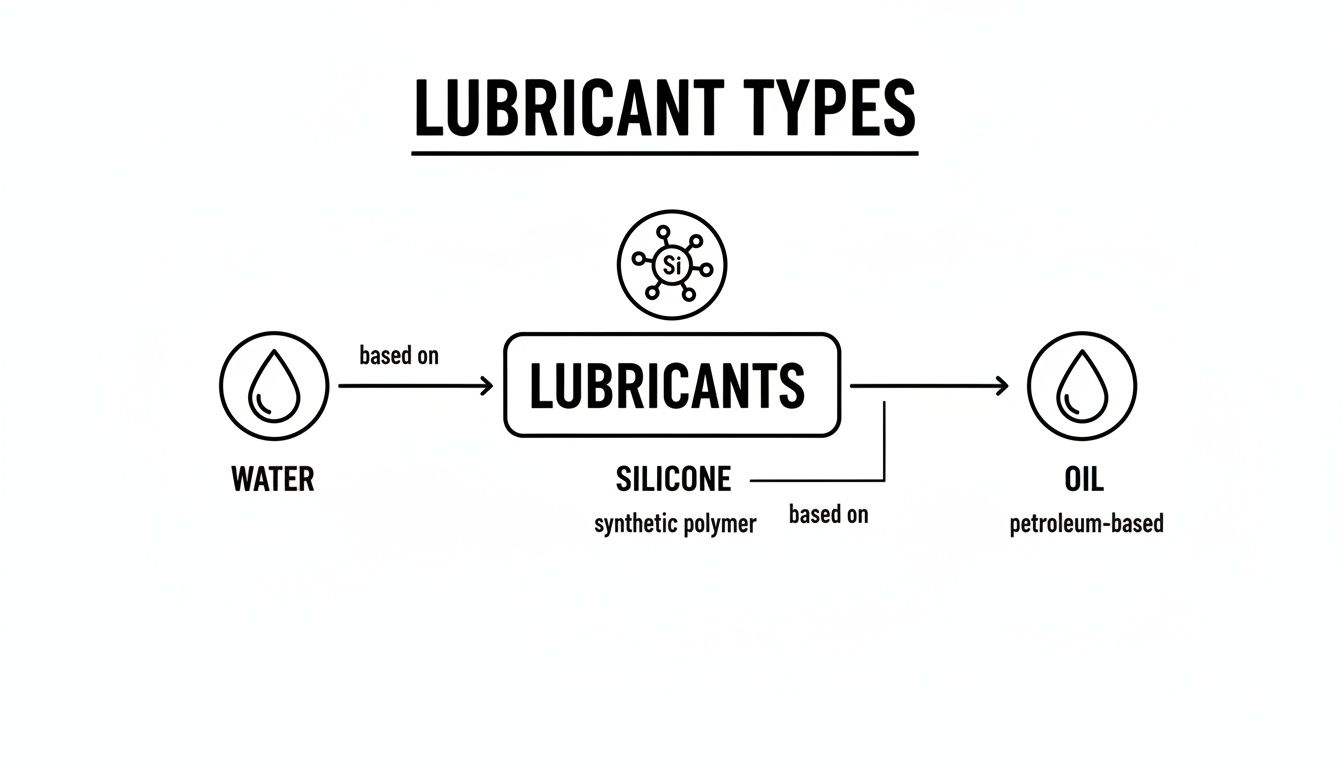
As you can see, everything starts with its base—water, silicone, or oil. That single difference completely changes what the lube is good for and what it's compatible with.
Why pH Balance and Osmolality Matter
Okay, we’re about to get a tiny bit scientific, but stick with me. Beyond just the ingredients, there are two concepts that are absolutely crucial for choosing the best water based lubricant for your vaginal health: pH and osmolality. You don’t need to be a scientist, but a basic grasp of these can be a game-changer.
Think of pH as the thermostat for your body’s intimate ecosystem. A healthy vaginal environment is naturally acidic, with a pH somewhere between 3.8 and 4.5. This acidity is a natural defense mechanism that keeps bad bacteria from taking over. If you use a lube with a pH that’s too high (more alkaline), it can disrupt that delicate balance and make you more prone to issues like bacterial vaginosis.
Key Takeaway: Always look for a lubricant that mentions it is "pH-balanced" or "formulated for vaginal pH." This one simple step helps protect your body's natural chemistry.
Osmolality sounds way more complicated than it is. It's basically a measure of how concentrated a substance is. Why does this matter for lube? A lubricant with high osmolality (hyperosmotic) is so concentrated that it actually sucks water out of your cells. This can lead to irritation, dryness, and even tiny, invisible tears in the tissue—ouch.
On the flip side, a formula with a low, body-friendly osmolality (iso-osmotic) is a hydrator. It works in harmony with your tissues. This is especially important if you already deal with dryness or have sensitive skin. It’s the difference between a lube that provides comfort and one that secretly makes things worse. By keeping an eye out for these details on the label, you can confidently choose a product that truly works with your body.
Matching the Right Lube to Your Needs
Walking into the lube aisle can feel a bit overwhelming. With so many bottles promising so many different things, how do you even start? The secret isn't finding the single "best" lube on the market, but the best one for you and for the moment you have in mind.
Think of it like picking out a good pair of shoes—you wouldn't wear hiking boots to a black-tie dinner. The right lube depends entirely on the activity. A little forethought can turn a confusing choice into an empowering one. Are you planning a quickie or a long, luxurious evening? Does your skin get irritated easily? Answering a few simple questions is the first step to finding your perfect formula.
For Those with Sensitive Skin
If your skin throws a fit over new products, the ingredient list is your new best friend. For sensitive skin, less is definitely more. You’re looking for a hypoallergenic formula, which is just a fancy way of saying it’s made without the usual suspects that cause redness and irritation.
Keep an eye out for labels that proudly say:
- Glycerin-Free: Glycerin is a type of sugar alcohol. For some people, it can mess with the vagina's natural pH balance and even contribute to yeast infections.
- Paraben-Free: Parabens are common preservatives. Many people choose to avoid them due to concerns about skin irritation or potential hormone disruption.
- Fragrance-Free: This one’s a biggie. Added perfumes are one of the top causes of allergic reactions, and they really have no business being in a product designed for your most delicate areas.
A simple, clean formula gives you all the slip and slide you want, without any of the frustrating side effects.
When You Need Long-Lasting Glide
Let's be honest, one of the few downsides of a standard water-based lube is that it can dry out, especially during longer sessions. It’s a total mood-killer to have to pause and reapply. This is exactly where hybrid lubricants shine.
These clever formulas are still mostly water-based, but they're mixed with a small amount of high-grade silicone. This blend truly offers the best of both worlds: you get the clean, natural feel of a water-based lube, but with the incredible staying power and silky glide of silicone. A hybrid is a fantastic choice for marathon lovemaking or for anal play, where constant slickness is key to staying comfortable and safe.
The personal lubricant market was valued at a whopping US$1.6 billion, a fast-growing niche within the massive US$173.5 billion global lubricants market in 2024. This just goes to show how many people are looking for specialized products that deliver on promises like long-lasting performance. You can dig into more industry data in this MarketsandMarkets research.
Exploring Specialty Lubricants
Once you have your basics covered, you can start exploring the fun stuff. Specialty lubes are all about adding a new layer of sensation to your sex life. They’re a great way to experiment with new feelings, whether you're with a partner or flying solo.
Some of the most popular types include:
- Warming Lubes: These formulas create a gentle, pleasant warmth on contact, which can increase blood flow and heighten sensitivity. Perfect for adding a cozy, stimulating touch.
- Cooling or Tingling Lubes: On the flip side, these use ingredients like menthol to create a cool, tingly feeling that many people find incredibly arousing and exciting.
- Flavored Lubes: Made specifically for oral sex, these come in all sorts of delicious flavors to make the experience even tastier. Just make sure you grab one that’s sugar-free to keep things healthy.
Putting It All Together: A Use-Case Guide
So, how does all this work in the real world? Let’s connect the dots and break down which lube to grab for some common scenarios.
- For Quick Solo Sessions: A classic, no-fuss water-based formula is your go-to. It’s slick right out of the bottle, feels natural, and washes off in a snap.
- For Partnered Vaginal Intercourse: A high-quality, pH-balanced water-based lube or a light hybrid is perfect. It works with natural moisture beautifully and never feels sticky.
- For Marathon Nights: This is a job for a long-lasting hybrid formula. You won’t have to keep stopping to reapply, so you can stay lost in the moment.
- For Anal Play: Don’t mess around here. A thicker, more cushiony hybrid or a high-performance, long-lasting water-based gel is non-negotiable. You need that extra padding and durable glide for comfort and safety. You can also check out our guide on the top-rated sex toys that are a perfect match for these formulas.
Getting the Most Out of Your Lube: Pro Tips for Use and Storage

You've picked out the best water based lubricant—awesome! But knowing how to use it is where the real magic happens. Getting the application, cleanup, and storage right will completely transform your experience, making sure every session is safe, pleasurable, and totally seamless.
Think of applying lube as part of the fun, not just a necessary step. Instead of just squirting it on, try putting a little in your hands and turning it into a sensual massage. This simple trick warms up the lube (and you!), building anticipation and making everything feel more connected right from the start.
The Art of a Perfect Application
There’s no universal rule for how much lube to use. It really depends on you, what you're doing, and the lube's consistency. A good place to begin is with a quarter-sized dollop. It's always easy to add more, but starting with a giant puddle can get a little messy.
The goal is to cover every point of contact—that means all body parts and any toys you’re using. A classic mistake is only putting it in one spot, which can leave other areas high and dry. Don't be shy about reaching for the bottle again whenever things start to feel less slick.
- Warm It Up First: Rub the lubricant between your palms for a few seconds. A sudden jolt of cold lube can be a mood-killer, but warming it makes it feel incredibly natural and inviting.
- Be Generous for Anal Play: The tissues in the anus don't produce their own lubrication, so you'll definitely need more than you think. A thicker, gel-like water-based formula is perfect for this, as it provides extra cushion and lasts longer. For a deeper dive, check out our guide on how to prepare for anal play.
- The Reapplication Trick: Feeling things start to dry out? A few drops of water can often reactivate the lube you've already applied, bringing back that slippery glide without needing to add more product.
Easy Cleanup and Smart Storage
Honestly, one of the best things about water-based lubes is how incredibly easy they are to clean up. Since they're water-soluble, you don't have to worry about them staining your favorite sheets or clothes. A little warm water and a cloth, and it's gone. No sticky, tacky residue left behind.
Storing your lube correctly is just as crucial as using it right. Proper storage protects the formula's integrity, ensuring it’s safe and effective every single time you need it.
How you store your lube directly impacts its effectiveness and safety. Think of it like any other personal care product—a stable environment is key to preserving the formula and preventing any nasty bacterial growth.
Keeping your lubricant in top-notch condition is simple. Just follow these rules:
- Keep It Cool and Dark: A bedside drawer or a bathroom cabinet is the perfect home for your lube. Keep it out of direct sunlight, which can degrade the ingredients, and away from heat that can mess with its consistency.
- Avoid Extreme Temperatures: Your lube won't be happy in a sweltering car or a freezing garage. Big temperature swings can damage the preservatives that keep it safe for you to use.
- Check the Expiration Date: That’s right, lube has a shelf life. You'll usually find the date printed on the bottle or on the sealed end of the tube. Once it's expired, the preservatives may no longer be effective, creating a potential breeding ground for bacteria. It's not worth the risk
Our Top Water-Based Lube Picks
Alright, now that you know what to look for, let's put that knowledge into practice. We've handpicked a few standouts from our Pleasure Trunk collection that perfectly match the needs we've been talking about.
Think of this less as a simple product list and more as a guided tour. We’ve lined up our recommendations to solve the most common issues people face, so you can easily find a fantastic, body-safe formula that just clicks with what you're looking for.
For Ultimate Purity and Sensitive Skin
When you have sensitive skin or are prone to irritation, the ingredient list is everything. You absolutely need a lube that skips potential troublemakers like glycerin, parabens, and fragrances. Simple is always better.
Our go-to choice for this is a hypoallergenic, pH-balanced formula built for pure, gentle hydration. With a minimalist ingredient list, it delivers a slick, natural-feeling glide without any of the extra stuff that might throw your body's chemistry off-balance. It’s the perfect, worry-free choice for both everyday comfort and intimate play.
For Long-Lasting, Uninterrupted Pleasure
There are times when you just don’t want to hit pause. For longer sessions or anal play, you need a lube with serious staying power. This is where a hybrid formula really shines, blending the clean feel of water with a dash of silicone for incredible longevity.
We highly recommend a hybrid that gives you an exceptionally smooth, long-lasting glide without feeling greasy or heavy. You truly get the best of both worlds: the endurance you need for a marathon night, plus the easy cleanup you love from a water-based formula. It lets you stay lost in the moment, not constantly reaching for the bottle.
Choosing a lubricant specifically formulated for your needs—whether it’s a pure and simple formula for sensitivity or a hybrid for endurance—is an investment in a more comfortable, pleasurable, and confident sexual experience.
For Adding a Spark of Sensation
Looking to turn up the heat? A specialty lubricant can introduce an exciting new layer to your playtime. Warming formulas are a fan favorite for the way they can heighten sensitivity and build arousal.
Our top warming lube creates a gentle, pleasant heat on contact. This little bit of warmth increases blood flow to the area, making every touch feel more electric. It’s a fantastic way to spice things up and add a cozy, stimulating twist to foreplay or intercourse, all while starting from a high-quality, body-safe base.
Got Questions? We've Got Answers
Stepping into the world of personal lubricants can bring up a few questions. That's totally normal! To make sure you feel confident and in the know, we've put together some straight-to-the-point answers to the things people ask most.
So, Is It Okay to Use Lube Every Day?
For most people, the answer is a resounding yes. Using a high-quality, water-based lubricant daily is perfectly fine, whether for intimate moments or just as a personal moisturizer to help with everyday dryness.
The trick is to be picky about ingredients. Look for a simple, body-safe formula that's pH-balanced and steers clear of common irritants like glycerin, especially if you're using it often. And as with anything, the best advice is to listen to your body. If you notice any irritation, it's a good idea to pause and check that ingredient list again.
What's the Connection Between Lube and Yeast Infections?
This is a really important question, and it all boils down to the ingredients. Some common additives, particularly glycerin and other sugars, can potentially throw off the natural balance of your vaginal flora. If you're someone who's already prone to yeast infections, this disruption can sometimes raise the risk.
The best way to sidestep this issue is to choose a lube made with sensitive bodies in mind. A glycerin-free, pH-balanced formula is always your safest bet. It's designed to work with your body’s chemistry, not against it, which can make all the difference in keeping things healthy and comfortable.
The right lubricant should solve problems, not create them. Prioritizing body-safe ingredients like those in a pH-balanced, glycerin-free formula is the most effective way to ensure your comfort and prevent potential issues like yeast infections.
How Much Lube Should I Actually Be Using?
There’s no universal rule here—the right amount really depends on you, what you're doing, and the lube's consistency. A thicker gel formula will go further than a thin, liquid one.
A good starting point is to squeeze out a quarter-sized dollop. You can always add more if you need it. The goal is simple: effortless, comfortable glide with zero friction. Don't be shy about reapplying whenever things start to feel a bit dry. A little extra lube is almost always a good idea.
Does Water-Based Lube Go Bad?
It absolutely does. Like your other personal care items, lubricants have an expiration date. You should be able to find it stamped on the bottle or printed on the original box.
Pay attention to that date! As time goes on, the preservatives in the formula can stop working as well as they should. This could create an environment where bacteria or mold might grow—definitely not something you want anywhere near your intimate areas. To be safe, it's best to toss any product once it's past its prime.
At Pleasure Trunk, we're all about making sure everyone has access to safe, comfortable, and amazing experiences. Take a look at our handpicked collection of top-tier, body-safe lubricants to find the one that’s just right for you. Shop the Pleasure Trunk collection today!
0 comments